
In the fast-evolving landscape of social media, achieving optimal impact requires a well-orchestrated governance strategy. This article delves into the essential elements that constitute the three pillars of best-in-class social media governance, providing guidance for seamless implementation in both internal and external organizational activities.
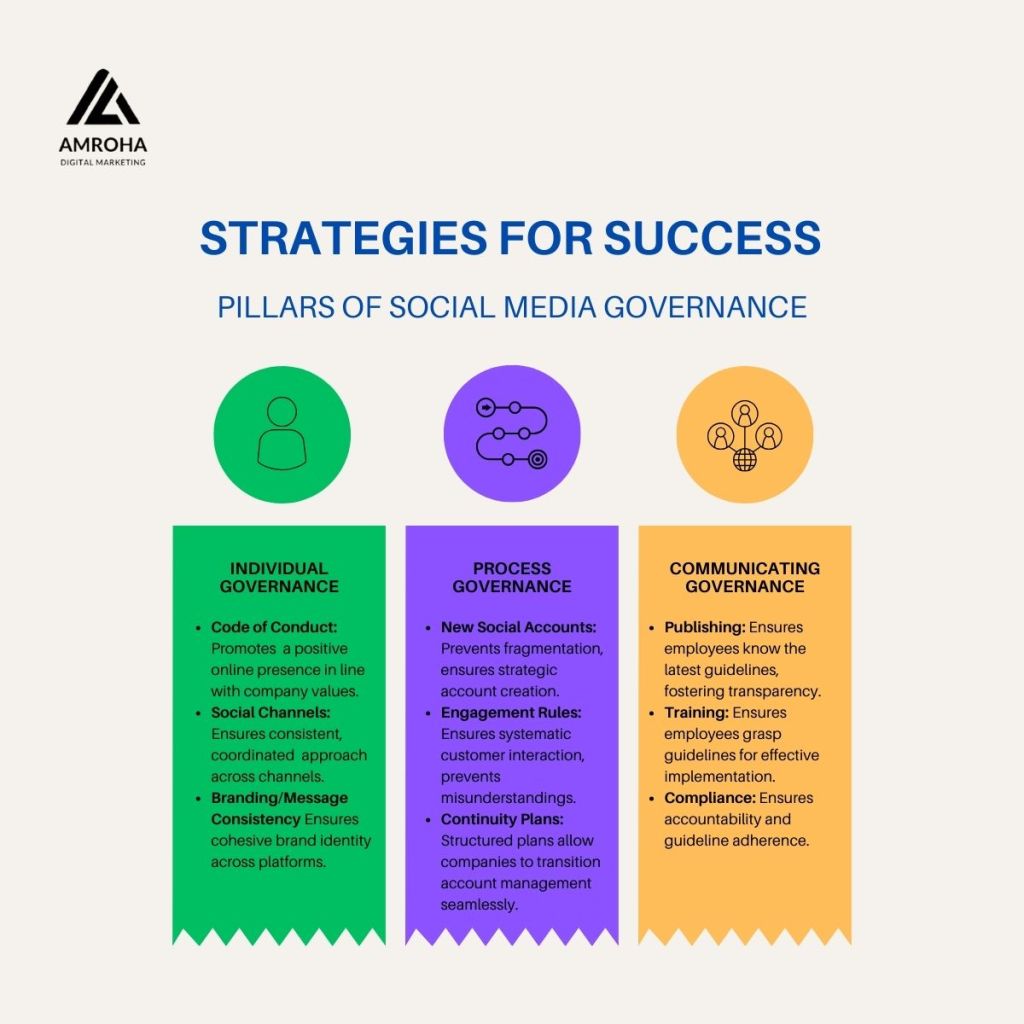
Individual Governance
The foundation of social media governance lies in a comprehensive policy that governs individual staff usage. This includes a code of conduct defining permissible social media practices, authorization protocols for corporate account postings, and guidelines for obtaining approval to represent the company via personal social accounts. Striking a balance between enabling positive communication and adhering to regulatory rules, this pillar ensures a unified approach to social engagement.
The following are examples that illustrate the successful implementation of individual governance:
- Code of Conduct: Develop a comprehensive code of conduct specifying the do’s and don’ts of social media engagement. For instance, employees can be educated on the importance of refraining from divulging confidential information, maintaining a positive tone, and avoiding negative comments about competitors. This enables a positive online presence aligned with organizational values.
- Social Channels: Create a detailed policy outlining the use of various social channels. For instance, delineate guidelines on how employees should represent the company on platforms like Twitter, LinkedIn, and Facebook. This ensures a consistent and well-coordinated approach across different channels.
- Branding/Message Consistency: Link the social governance policy to the organization’s branding and messaging guidelines. Provide examples of how employees should align their social media posts with the company’s branding elements, ensuring a cohesive and recognizable brand identity across diverse social platforms.
Process Governance
Establishing robust processes is critical for managing social media accounts effectively. Processes should cover the creation and maintenance of accounts, workflows for responding to issues, and approval procedures for content. From presenting business cases for new social accounts to defining rules of engagement and implementing continuity plans to handle employee turnover, process governance guarantees a structured and efficient social media landscape.
The following are examples that illustrate the successful implementation of process governance:
- New Social Accounts: Establish a process for proposing new corporate social accounts. Require individuals or teams to present a business case justifying the need for the account, detailing its management, and ensuring it doesn’t overlap with existing accounts. This prevents fragmentation and ensures a strategic approach to social account creation.
- Rules of Engagement: Implement a workflow for responding to inquiries or issues on social media. For instance, create guidelines specifying how employees should acknowledge posts and route queries to the appropriate department for resolution. This ensures a systematic approach to handling customer interactions and prevents misunderstandings.
- Continuity Plans: Develop documented continuity plans for each social media account. This includes maintaining a database of all corporate accounts and their login credentials to prevent disruptions in case of employee turnover. By having a structured plan in place, organizations can seamlessly transition account management responsibilities.
Communicating Governance
Even the most well-crafted governance policy is futile without effective communication and absorption by staff. This pillar emphasizes publishing policies through appropriate channels, integrating them into training curricula, and monitoring compliance to ensure adherence. By fostering a shared understanding of accepted practices, organizations can create a smooth flow of social content and engagement while minimizing the need for exhaustive reviews.
The following are examples that illustrate the successful implementation of communicating governance:
- Publishing: Use various communication channels to publish the social media policy, such as internal emails, company intranet, or a wiki for easy navigation. Regularly update and communicate changes to ensure employees are aware of the latest guidelines, fostering a culture of transparency and awareness.
- Training: Integrate social media policy training into the onboarding process and ongoing professional development. Provide examples of acceptable social media practices during training sessions, ensuring that employees understand and internalize the guidelines for effective implementation.
- Compliance: Utilize automated social media monitoring tools to audit the organization’s social accounts and posts. Establish an escalation path for enforcement actions in collaboration with the HR department, ranging from verbal warnings to termination based on the severity of policy violations. This ensures accountability and adherence to established guidelines.
By implementing these three pillars of social media governance, organizations, including B2B entities, can fortify their brand, maintain consistency in messaging, and ensure timely responses to customer inquiries. As the social media landscape evolves, regular reviews and updates of governance guidelines become imperative for staying ahead in the dynamic realm of social engagement.
Success Story

Rebranding WebCanada
As Marketing Director at WebCanada, I played a pivotal role in elevating the company’s brand visibility, enhancing market positioning, and driving significant growth in sales and customer engagement.
Read success story now.
Let’s Talk
Let’s explore how I can boost your social media marketing efforts.
I adopt a strategic approach, concentrating on your target audience’s engagement journey across social media platforms.
Complete the form now, and let’s dive into optimizing your social media strategy.



Improve Your Marketing ROI | info@amrohadigital.com
 Your B2B & Digital Marketing Agency