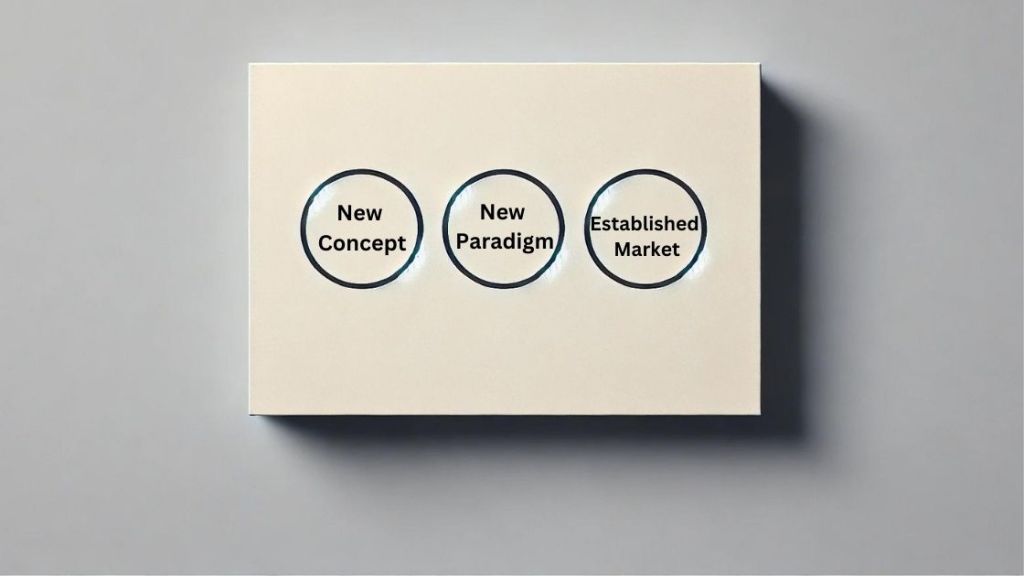
In the complex world of B2B marketing and sales, creating effective demand generation strategies is vital to success. Yet, with so many products, services, and tactics to choose from, it can be overwhelming to know where to start. One of the most critical steps in crafting a demand generation strategy is understanding the type of demand you’re dealing with. According to Forrester, there are three distinct demand types that B2B organizations need to recognize:
- New Concept
- New Paradigm
- Established Market
Each demand type requires different marketing and sales approaches, and understanding these nuances can significantly impact your success.
1. New Concept Demand
- Definition: New Concept demand refers to products or services that are entirely disruptive to the market. These offerings typically have no existing budgetary line item within target organizations because they introduce something completely novel. Marketing and selling these products is highly evangelistic, requiring teams to uncover latent needs and identify early adopters who are willing to take a leap into uncharted territory.
- Example: Imagine introducing the first cloud computing service back in the early 2000s. At that time, most companies had their IT infrastructure on-premises, and the idea of storing data and running applications in the cloud was revolutionary. The challenge here was not just to sell the concept but to convince potential customers of its value and feasibility. Marketers and sales teams had to target visionaries within organizations who were open to pioneering new technologies.
- Strategy: For New Concept demand, your strategy should focus on educating the market and building trust. Thought leadership content, white papers, and engaging industry influencers are crucial. Your sales team should be adept at consultative selling, focusing on uncovering problems that the prospect may not even realize they have.
2. New Paradigm Demand
- Definition: New Paradigm demand revolves around products or services that optimize existing processes or solve known issues more effectively than currently possible. Unlike New Concept demand, these offerings typically replace or augment existing solutions, making them more relevant to organizations that are already aware of the problem but are seeking a better way to address it.
- Example: Consider the shift from traditional software licenses to Software-as-a-Service (SaaS). SaaS offered a new way of accessing and managing software that was more scalable, cost-effective, and easier to update. Companies were already spending on software; the challenge was convincing them that SaaS was a superior alternative.
- Strategy: When dealing with New Paradigm demand, your marketing should emphasize the inefficiencies of the current approach and how your solution provides a clear, measurable improvement. Case studies, ROI calculators, and customer testimonials can be powerful tools. Sales teams should focus on positioning your solution as the natural evolution of the existing market.
3. Established Market Demand
- Definition: Established Market demand is associated with products or services that are well-accepted and widely recognized as necessary within the industry. In this scenario, the market is mature, and the competition is fierce, with a few dominant players battling for market share.
- Example: Think of CRM software today. The market is saturated with solutions from giants like Salesforce, HubSpot, and Microsoft Dynamics. Organizations understand the value of CRM, and the key challenge for marketers and salespeople is differentiating their product from the competition.
- Strategy: In an Established Market, the focus should be on competitive positioning. Highlighting unique features, superior customer service, and long-term reliability are crucial. Your marketing efforts should include comparative content, such as feature-by-feature comparisons and analyst reports. The sales team should be equipped to handle objections related to switching costs and loyalty to incumbent solutions.
Bringing It All Together
Success Story

Transforming Concierge Plus
As Marketing Director at Concierge Plus Inc., I spearheaded initiatives that propelled the company to new heights, amplifying brand awareness and driving significant increases in sales. Read success story now.



Improve Your Marketing ROI | info@amrohadigital.com
 Your B2B & Digital Marketing Agency